
Back
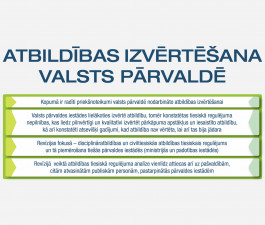
In general, prerequisites have been created for assessing disciplinary liability and civil liability of public sector employees. Yet, the conditions for assessing and applying disciplinary liability depend on the type of legal employment relationship and the legal framework for assessing liability is fragmented, as finding out the circumstances of a violation in a timely and complete manner and make decisions are not always possible to promote the liability of public sector employees and determine what improvements an internal control environment needs. In practice, the distinction between the status of an official and an employee does not always correspond to the legal framework, and the boundaries between these positions and types of employment are blurred. These are major conclusions after the audit, in which the State Audit Office of Latvia assessed whether prerequisites have been created for assessing the liability of public sector employees and responsible work done.
Trust in state administration is related to citizens’ perceptions of the ability of public sector employees to take responsibility, assess, and admit mistakes if they have been made, as well as to perceptions of individual liability for the quality of work, the compliance of decisions, and actions with regulations and public interests. Therefore, it is important that in situations where violations are detected in the actions of public sector employees, an institution acts consistently: assesses violations comprehensively and impartially, makes a fair decision, determines a proportionate punishment and, as necessary, improves the institution’s internal control environment.
The focus of the auditors’ attention was the legal regulation of disciplinary liability and civil liability and its application in direct state administration, however, the extensive regulation analysis carried out within the scope of the audit also applies equally to local and regional governments, other derived public entities, and intermediate administrative institutions.